Yes, I know I reblogged it before; I’m reblogging it again.
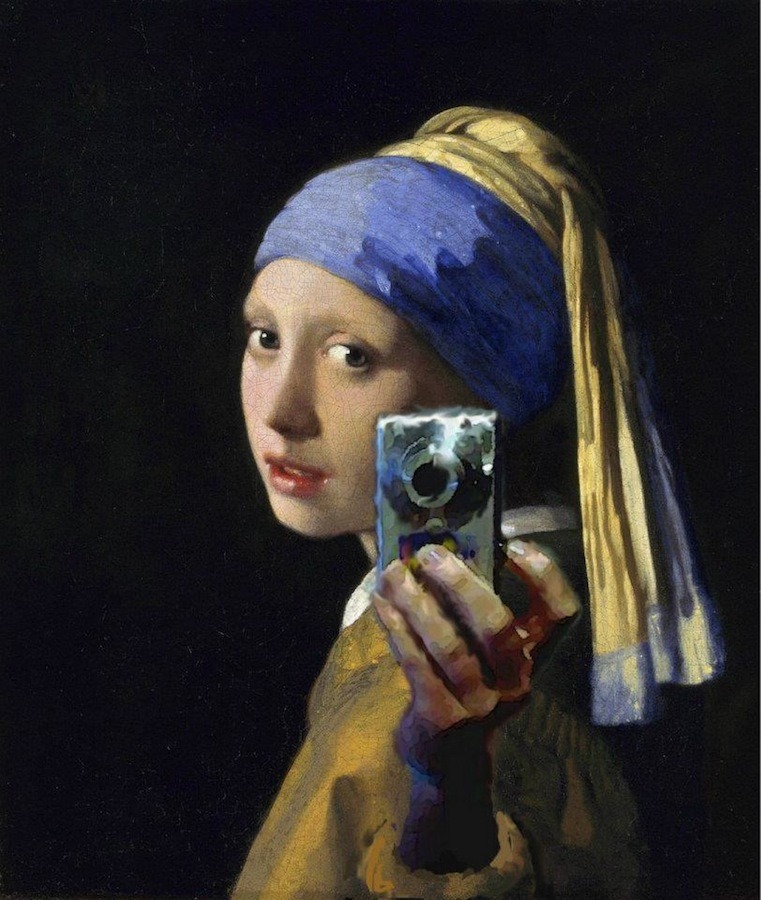
This image epitomises the delight I get from transformative works, and it’s a beautifully eloquent response to Robin Hobb’s misguided rant about fanfiction:
“The intent of the author is ignored. A writer puts a great deal of thought into what goes into the story and what doesn’t. If a particular scene doesn’t happen ‘on stage’ before the reader’s eyes, there is probably a reason for it. If something is left nebulous, it is because the author intends for it to be nebulous. To use an analogy, we look at the Mona Lisa and wonder. Each of us draws his own conclusions about her elusive smile. We don’t draw eyebrows on her to make her look surprised, or put a balloon caption over her head. Yet much fan fiction does just that. Fan fiction closes up the space that I have engineered into the story, and the reader is told what he must think rather than being allowed to observe the characters and draw his own conclusions.” Robin Hobb on fanfiction
http://web.archive.org/web/20050630015105/http://www.robinhobb.com/rant.html
And she’s wrong, she’s SO wrong. Granted, drawing a mustache onto the Mona Lisa would be a bad thing, a final thing, a change-the-source thing, but there are COUNTLESS images that mess with the Mona Lisa without ever actually damaging the source image, without ever preventing a viewer from engaging with the pristine source image and interpreting it as they see fit. The Mona Lisa remains inviolate, regardless of weed-smoking iterations or The Da Vinci Code, and the audience are free to interpret her as they will. Transformative works based upon her are examples of people sharing one possible interpretation, or addressing problems they perceive, or bringing a marxist/feminist/whateverist reading to the fore, or just making their friends giggle.
This, though, this is so much better than anything I’ve seen that transforms the Mona Lisa. This takes that gorgeous, familiar image of Vermeer’s Girl With A Pearl Earring (an image that the book and movie of the same name have made familiar to people outwith Art History students [who might know it as the ‘Mona Lisa of the North’]) and reworks it with brilliant and elegant simplicity.
Manet’s painting ‘Olympia’ does something similar with Titian’s ‘Venus of Urbino’ (which is itself a reworking of Giorgione’s ‘Sleeping Venus’); Georgione dresses up his objectifying & titillating high class porn as an image of a goddess, and has her eyes closed – she doesn’t know we’re ogling her. She’s helpless before our (male) voyeuristic gaze. Titian’s nude knows we’re ogling her, but she’s still putatively a goddess, and despite that she’s glancing coyly away as she consciously provokes the viewer, offering herself up to him. Manet’s nude, however, is unambiguously presented as a human and a prostitute, and she looks straight out at the viewer, her hand on her thigh making it clear that she alone chooses who gets access to her sex. The painting was received with shock and disgust and had to be protected from those who wanted to destroy it for its obscenity – not for showing naked flesh, but for making the naked woman into a subject, rather than an object.
http://en.wikipedia.org/wiki/Olympia_%28Manet%29
God, I’m rambling. Anyway, point being – transformative work, intratextual work, is most emphatically not a new thing, nor a creatively barren thing. It’s awesome. And this image here is delicious, because it takes that lovely painting, in which the model is mysterious, alluring, her parted lips gleaming and her eyes wide as she looks out at the viewer, objectified – and it drags it straight into the 21st century by adding the camera, making it into that recognisable MySpace pose, making her the CREATOR of the image not just the object. She is looking at herself, not at us, and this careful composition becomes an ephemeral snapshot, a fleeting moment in her day.
This.
Reblogging for all the commentary. There has been so much transformative work that has elevated the original, turned it on its head, made us all think, and yes, hangs in museums today. When the author of that quote thumbs her nose at fanfiction, she turns her head away from Warhol, from Ovid, from motherfucking Shakespeare.
These are the creators who have transformed their world and placed their own indelible marks on society as we know it, with their “fanworks”.there is this idea in the world that the author is somehow infallible. that they can’t make mistakes when it comes to their text. and to a certain extent, yes, that’s true; what happens in the canon is canon and that is that. no amount of it being stupid or poorly thought-out or narratively problematic will make it not so.
but the idea that this somehow translates into “everything the author does is perfect STOP TOUCHING THE THING I MADE” isn’t based on some kind of high-minded artiness. it’s territorial.
and look, i get it. this is a thing that you made, that you put your heart in soul into, and i understand not wanting other people messing it up. you love those characters, you don’t want some dumbshit thirteen year old writing them in a poorly-imagined porno with that background character you secretly think is a little shit.
but you know what? that’s too damn bad.
because the very act of engineering
the space … into the story, [where the reader is] allowed to observe the characters and draw his own conclusions
is what fanfiction is for.
what is it, exactly, that you think fanfiction is? it is the act of drawing conclusions. a fanfiction writer is the most active, engaged, hungry reader you’re ever going to get. so if you want someone who is going to sit back and drool mindlessly over how pretty your words are, yeah, you know what? fanfiction writers are not for you.but if you want to talk about it, if you want people to actually engage with your art, have it affect them, then you’ve got to be willing to let your intent give up the ghost a little.
ps. i’ve said it once and i’ve said it again, shakespeare wrote fanfiction. he literally wrote ovid fanfiction. and what exactly do you think adapted movies are? what do you think “she’s the man” is? what do you think “the lion king” is? they’re AUs.
i can just see Walt Disney with his own blog being like, “oHMYGDO i just tripped and wrote a hamlet au except their lions wHAt am I DOING” and amanda bynes like, “i did a highschool soccer au for 12th night and i’m not even sorry about it” and way back in the late 1500s/early 1600s shakespeare wrote a letter to ann and he was like, “i just did a retelling of philomel but with a lady it’s AWESOME ps say hi to the kids for me xoxo billy.”
spoiler alert: those things didn’t happen. but like. metaphorically they did.
“Fan fiction closes up the space that I have engineered into the story, and the reader is told what he must think rather than being allowed to observe the characters and draw his own conclusions.”
Fanfiction is the drawing of those conclusions. That’s the point. It just takes it a step further and writes them down as opposed to keeping them purely mental. Just because someone writes a fic about a missing scene doesn’t mean everyone else has to accept it. It just means that people are engaging with the material and with each other. And frankly, I cannot understand how that could in any way be considered a bad thing. Do you not want your readers to engage with your text? Do you not want them to get attached to the characters, to want to know as much about them as possible, to view them as real people? Do you not want them to connect with each other out of love for the text you have created? That seems like a profoundly selfish attitude and an insulting one at that.

 Lady Karasu