Pamphlet found in the dictionary.
Ever wondered what they called anal sex in the 16th century, or cunnilingus during World War II?
Ever wonder what sex was called in the 1600s, how you might ask for a blowjob during the reign of Queen Elizabeth, or how your great-grandfather might have asked for anal sex?
Following up on his research which gave us 2,600 words for genitalia throughout the ages, slang lexicographer Jonathon Green has given us three amazing new resources, describing what sexual intercourse, oral and anal, and sexual secretions and contraceptives have been called at various points over the last 700 years.
I’m going to be more careful about announcing I need to go clean up the kitchen.
WHITEWASHING SOMEONE’S KIDNEYS OH MY GOD
Gobbledygoo. Ok.
Why Engagement Rings Are a Scam
Sooooo, no ring is what you’re saying?
well ain’t that a bitch …
Learned about this last year.
Before women got on board with the right to defend themselves with firearms, they turned to another tool which was widely available to them and could be easily concealed while still easily accessible – the hatpin.

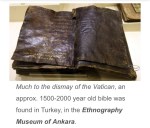

Uh oh
Oh snap. Everybody say WAAAA
WHOAAAAA
back the fuck up
There’s another story that I like about a Chinese general who had to defend a city with only a handful of soldiers from a huge enemy horde that was in all likelihood going to steamroll the place flat within hours of showing up.
So when said horde did arrive, they saw the general sitting outside the city’s open gates, drinking tea. The horde sent a couple of emissaries over to see what was what, and the general greeted them cheerfully and invited them all to come and take tea with him.
The horde decided that this was a scenario that had “MASSIVE FUCKING TRAP” written all over it in beautiful calligraphy and promptly fucked off.
Whoever that general was, he was clearly the Ancient Chinese equivalent of Sam Vimes.
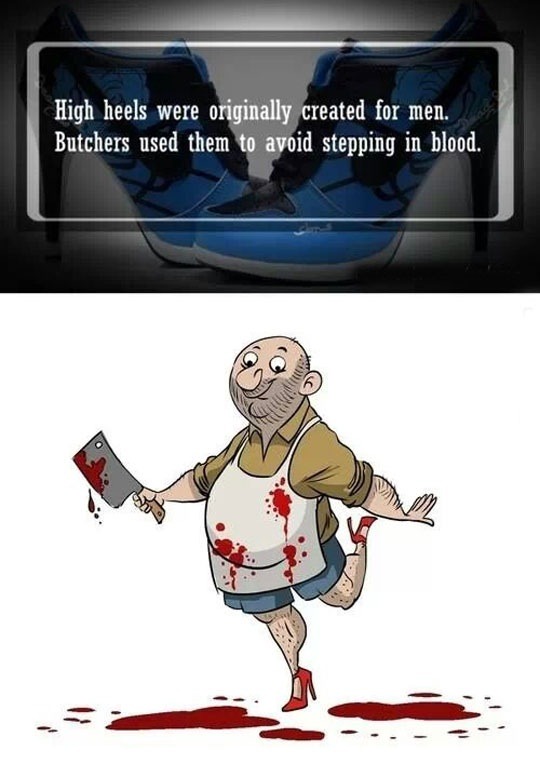
I’ve seen this image going around, and I feel compelled to point out that it’s only half-right. It’s true that high heels were originally a masculine fashion, but they weren’t originally worn by butchers – nor for any other utilitarian purpose, for that matter.
High heels were worn by men for exactly the same reason they’re worn by women today: to display one’s legs to best effect. Until quite recently, shapely, well-toned calves and thighs were regarded as an absolute prerequisite for male attractiveness. That’s why you see so many paintings of famous men framed to show off their legs – like this one of George Washington displaying his fantastic calves:
… or this one of Louis XIV of France rocking a fabulous pair of red platform heels (check out those thighs!):
… or even this one of Charles I of England showing off his high-heeled riding boots – note, again, the visual emphasis on his well-formed calves:
In summary: were high heels originally worn by men? Yes. Were they worn to keep blood off their feet? No at all – they were worn for the same reason they’re worn today: to look fabulous.
so then how did they become a solo feminine item of attire?
A variety of reasons. In France, for example, high heels fell out out of favour in the court of Napoleon due to their association with aristocratic decadence, while in England, the more conservative fashions of the Victorian era regarded it as indecent for a man to openly display his calves.
But then, fashions come and go. The real question is why heels never came back into fashion for men – and that can be laid squarely at the feet of institutionalised homophobia. Essentially, heels for men were never revived because, by the early 20th Century, sexually provocative attire for men had come to be associated with homosexuality; the resulting moral panic ushered in an era of drab, blocky, fully concealing menswear in which a well-turned calf simply had no place – a setback from which men’s fashion has yet to fully recover.
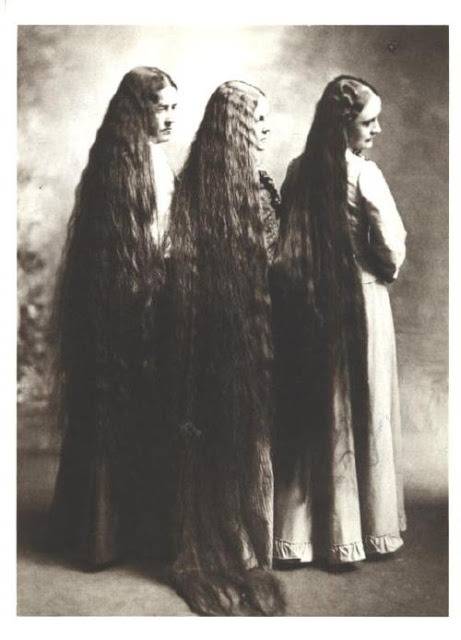
Historical women kept their hair clean, but that doesn’t mean their hair was often directly washed. Those who had incredibly difficult to manage hair might employ a hairdresser to help them wash, cut, and singe (yes, singe!) their hair as often as once a month, but for most women, hair-washing was, at most, a seasonal activity.
“Why?” you might ask. “Wasn’t their hair lank, smelly, and nasty?”
And the writers who embrace ignorance as a badge of honor will say, “Well, that just goes to show that people used to be gross and dirty, and that’s why I never bother with that historical accuracy stuff!”
And then I have to restrain myself from hitting them…
The reason that hair was rarely washed has to do with the nature of soaps versus modern shampoos. Soaps are made from a lye base and are alkaline. Hair and shampoo are acidic. Washing hair in soap makes it very dry, brittle, and tangly. Men’s hair was shirt enough and cut often enough that using soap didn’t harm it too much and the natural oils from the scalp could re-moisturize it fairly easily after even the harshest treatment, but in an age when the average woman’s hair was down to her waist, soap could literally destroy a woman’s head of hair in fairly short order.
Instead, indirect methods of hair-cleaning were used. Women washed their hair brushes daily, and the proverbial “100 strokes” were used to spread conditioning oils from roots to tips and to remove older or excess oil and dirt. This was more time-consuming than modern washing, and this is one of the reasons that “good hair” was a class marker. The fact that only women of the upper classes could afford all the various rats, rolls, and other fake additions to bulk out their real hair was another. (An average Victorian woman of the upper middle or upper class had more apparent “hair” in her hairstyle than women I know whose unbound hair falls well below their knees.) Women rarely wore their hair lose unless it was in the process of being put up or taken down–or unless they were having a picture specifically taken of it! At night, most women braided their hair for bed. Now that my hair is well below my waist, I understand why!
The first modern shampoo was introduced in the late 1920s. Shampoos clean hair quickly and also remove modern styling products, like hairspray and gel, but the frequent hair-washing that has become common leaves longer hair brittle even with the best modern formulations. (From the 1940s to the 1960s, many if not most middle-class women had their hair washed only once a week, at their hairdresser’s, where it was restyled for the next week. The professional hairdresser stepped into the void that the maid left when domestic service became rare. Washing one’s hair daily or every other day is a very recent development.) That’s where conditioners came into play. Many people have wondered how on earth women could have nice hair by modern standards before conditioners, but conditioners are made necessary by shampoos. Well-maintained hair of the 19th century didn’t need conditioners because the oils weren’t regularly stripped from it.
Additionally, the oils made hair much more manageable than most people’s is today, which made it possible for women to obtain elaborate hairstyles using combs and pins–without modern clips or sprays–to keep their hair in place. This is why hair dressers still like to work with “day-old” hair when making elaborate hairstyles.
There were hair products like oils for women to add shine and powders meant to help brush dirt out of hair, but they weren’t in very wide use at the time. Hair “tonics”–mean to be put on the hair or taken orally to make hair shinier, thicker, or stronger–were ineffective but were readily available and widely marketed.
If you have a heroine go through something particularly nasty–such as a fall into a pond or the like–then she should wash her hair, by all means. This would be done in a tub prepared for the purpose–not in the bath–and would involve dissolving soap shavings into a water and combine them with whatever other products were desired. Then a maid would wash the woman’s hair as she leaned either forward or backward to thoroughly wet and wash her hair. Rinsing would be another stage. The hair would NEVER be piled on the head. If you have greater than waist-length hair and have ever tried to wash it in a modern-sized bathtub, you understand why no one attempted to wash her hair in a hip bath or an old, short claw foot tub! It would be almost impossible.
A quick rundown of other hair facts:
Hydrogen peroxide was used to bleach hair from 1867. Before that, trying to bleach it with soda ash and sunlight was the most a girl could do. Henna was extremely popular from the 1870s through the 1890s, especially for covering gray hair, to such an extent that gray hair became almost unseen in certain circles in England in this time. Red hair was considered ugly up until the 1860s, when the public embracing of the feminine images as presented by the aesthetic movement (Pre-Raphaelite Brotherhood) gained ground, culminating in a positive rage for red hair in the 1870s to 1880s. Some truly scary metallic salt compounds were used to color hair with henna formulations by the late 19th century, often with unfortunate results.
Hair curling was popular in the 19th century and could either by achieved with rag rolls or hot tongs. Loose “sausage” rolls were the result of rag rolling. Hot tongs were used for making the “frizzled” bangs of the 1970s to 1880s–and “frizzled” they certainly were. The damage caused by the poor control of heating a curler over a gas jet or candle flame was substantial, and most women suffered burnt hair at one time or another. For this reason, a number of women chose to eschew the popular style and preserve their hair from such dangers! Permanents were first in use in the 1930s.
(From: http://www.lydiajoyce.com/blog/?p=1022)
Anne Shirley probably used indigo on her red red hair. Indigo will turn brown hair a lovely blue-black. Blue and orange? A most appalling green.
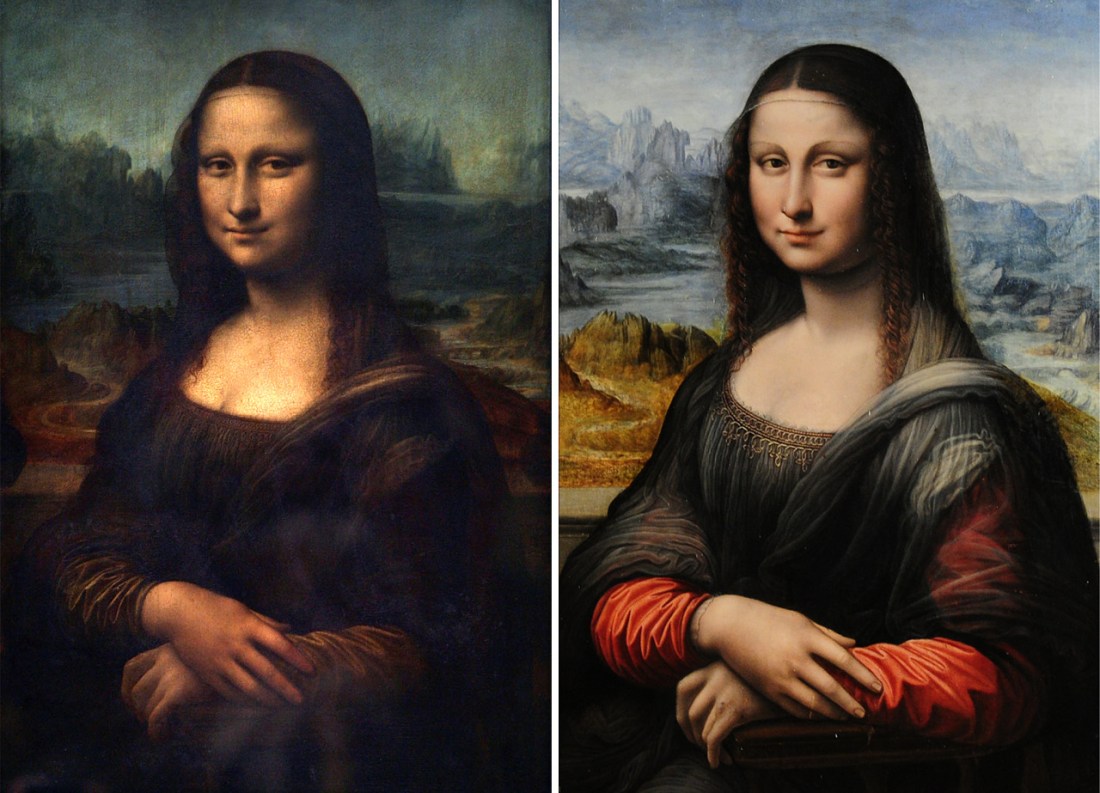
Meet the Mona Lisa of the Prado, the earliest known copy of Da Vinci’s best portrait. Similarity in the undersketch of the painting indicates that this was very likely painted concurrently with the original Mona Lisa, by a student of Da Vinci.
There is much controversy in the art world over the question of whether or not to clean the fragile Mona Lisa, but her sister has been restored and some fairly odd later alterations removed to show the original vibrant colors and lighting. Some details, such as the sheerness of her shawl and the pattern on the neckline of her dress, have become utterly obscured in the original, but in the restored copy they’re perfectly clear.
It blows my mind a little bit to look at these two sisters side-by-side and imagine how much vivid detail could be hiding in the Mona Lisa under 500 years of rotten varnish.
THE COPY HAS EYEBROWS
Your response to a beautiful piece of artwork done by Leonardo Da Vinci himself is “SHES GOT EYEBROWS”. Alright. All intelligent life has been lost.
Yo Snooty McSnotwhine, the Mona Lisa’s vanished eyebrows have been the subject of debate and analysis in the art expert community for hundreds of years, long before your parents squirted water at each other from across the clown car and then honked their bicycle horns to indicate they really wanted to make a smug, insufferable little clown baby together.
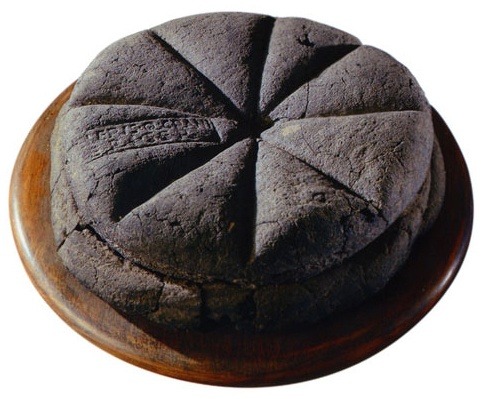
A loaf of bread made in the first century AD, which was discovered at Pompeii, preserved for centuries in the volcanic ashes of Mount Vesuvius. The markings visible on the top are made from a Roman bread stamp, which bakeries were required to use in order to mark the source of the loaves, and to prevent fraud. (via Ridiculously Interesting)
(sigh) I’ve seen these before, but this one’s particularly beautiful.
I feel like I’m supposed to be marveling over the fact that this is a loaf of bread that’s been preserved for thousands of years, and don’t get me wrong, that’s hella cool. But honestly, I’m mostly struck by the unexpected news that “bread fraud" was apparently once a serious concern.
Bread Fraud was a huge thing, Bread was provided to the Roman people by the government – bakers were given grain to make the free bread, but some of them stole the government grain to use in other baked goods and would add various substitutes, like sawdust or even worse things, to the bread instead. So if people complained that their free bread was not proper bread, the stamp told them exactly whose bakery they ought to burn down.
Bread stamps continued to be used at least until the Medieval period in Europe. Any commercially sold bread had to be stamped with an official seal to identify the baker to show that it complied with all rules and regulations about size, price, and quality. This way, rotten or undersized loaves could be traced back to the baker. Bakers could be pilloried, sent down the streets in a hurdle cart with the offending loaf tied around their neck, fined, or forbidden to engage in baking commercially ever again in that city. There are records of a baker in London being sent on a hurdle cart because he used an iron rod to increase the weight of his loaves, and another who wrapped rotten dough with fresh who was pilloried. Any baker hurdled three times had to move to a new city if they wanted to continue baking.
If you have made bread, you are probably familiar with a molding board. It’s a flat board used to shape the bread. Clever fraudsters came up with a molding board that had a little hole drilled into it that wasn’t easily noticed. A customer would buy his dough by weight, and then the baker would force some of that dough through the hole, so they could sell and underweight loaf and use the stolen dough to bake new loafs to sell. Molding boards ended up being banned in London after nine different bakers were caught doing this. There were also instances of grain sellers withholding grain to create an artificial scarcity drive up the price of that, and things like bread.
Bread, being one of the main things that literally everyone ate in many parts of the world, ended up with a plethora of rules and regulations. Bakers were probably no more likely to commit fraud than anyone else, but there were so many of them, that we ended up with lots and lots of rules and records of people being shifty.
Check out Fabulous Feasts: Medieval Cookery and Ceremony by Madeleine Pelner Cosman for a whole chapter on food laws as they existed in about 1400. Plus the color plates are fantastic.
Holy shit.
Bread is serious fucking business.


 Lady Karasu